fall 1966
Loading...
Loading...
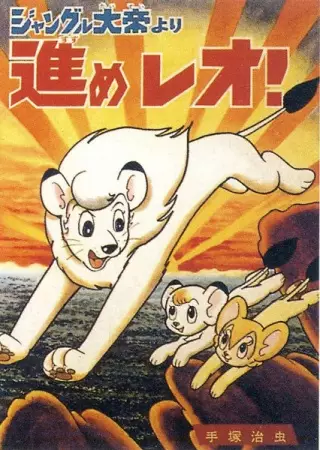
Jungle Emperor was such a hit in Japan, that Dr. Tezuka went ahead and produced a sequel in 1966, known in Japan as "The New Jungle Emperor" or "Onward, Leo!" The trouble (for us in the rest of the world) was that he made the series without having a deal with NBC, and he made it more like his original manga story, which means that there were a lot of characters that died and some of the episodes could be depressing. NBC thought that there was no way they could sell that kind of show, and they were quite happy with the 52 episodes they had, so the New Jungle Emperor series wasn`t seen in this country until 1984, when it was given the title Leo The Lion. This series was supposed to take place a few years after the original Kimba series. Kimba was an adult, with Kitty as his mate, and they had two cubs. Most of all this series was the story of Rune, the male cub, as he grew and learned to be as strong as his father. For legal reasons, the producers of the English-dubbed version could not use the name Kimba, so they used the original Japanese names for all the characters. (Source: Official Website)

A series of short animated segments, without dialog, explore major characters of modern society, such as the plastic surgeon, the fashion-obsessed woman, the rumor-monger, and others, leading to a concluding comment on the progress of civilization. (Source: ANN)

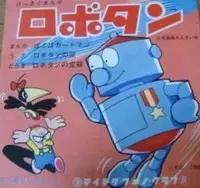
Based on a manga by Morita Kenji. Household robot Robotan, made by a nerdy school boy named Kan-chan, lives with an everyday Japanese family as a domestic servant and friend to the children. (Source: AniDB)
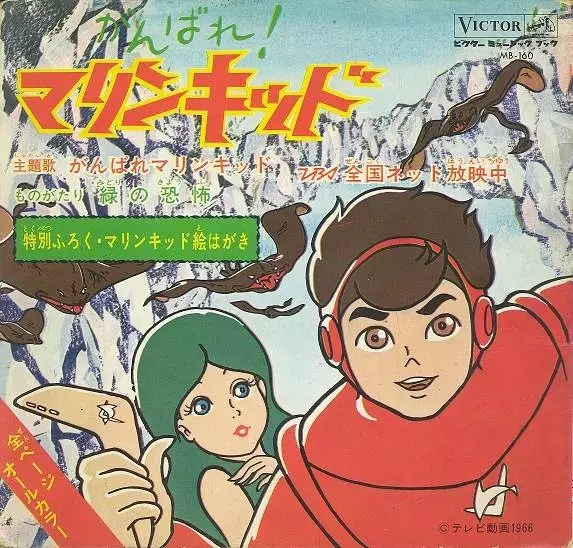
An expansion of the original Dolphin Ouji series. Character names were altered, (changing 'Dolphin Prince' to 'Marine Kid' and 'Neptuna' to 'Neptina'), characters were added and concepts expanded. In order to distance the new series from the original trial episodes, the series was re-titled Ganbare! Marine Kid. Marine, whose father, Dr. Mariner, is an oceanographer with the Ocean Patrol, has been genetically altered to have superior underwater swimming abilities and chews Oxygum to supply himself with air underwater. Along with his companion, Whitey the white dolphin (Splasher in the U.S. version), Marine helps his father keep the sea safe. (Source: Wikipedia and The Anime Encyclopedia)

A song for the Minna no Uta segment, it adapts "Flohwalzer" (Flea Waltz) is a simple German piano piece, often one of the first learned because its fingering is simple and it allows beginners to perform a piece that is harmonically and rhythmically pleasing. It has different names in different countries but in Japan this piece is known as Neko Funjatta (I Stepped on the Cat). (Source: Wiki)
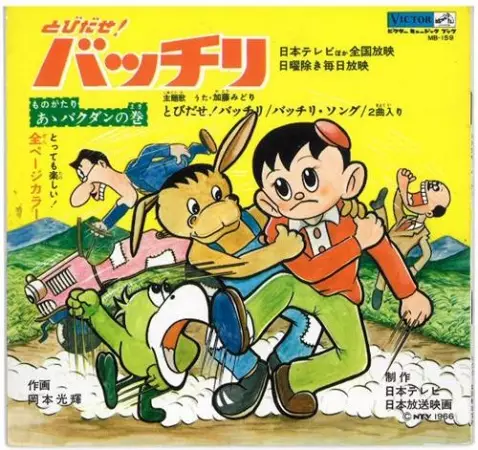
The adventures of jug-eared schoolboy detective Bacchiri, who can solve cases that baffle the police, thanks to his brilliantly ingenious mind. The 10 minutes episodes aired daily, Monday through Saturday. (Source: The Anime Encyclopedia & AniDB)
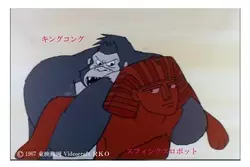
Recap of the first episodes of the TV Series.
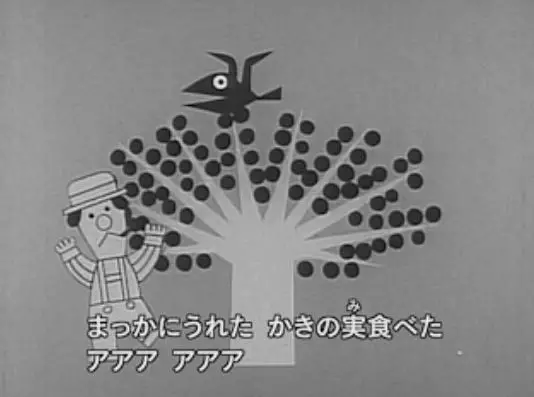
A song about the circle of life. A crow eats a persimmon and poops the seed out. The elements let the seed sprout and grow. It turns into a new persimmon tree and a new crow comes along and repeats the process.

Music video for the song Mama to Go-go by Mieko Hirota and the Suginami Jidou Gasshoudan that was featured on NHK's Minna no Uta program. It is considered to be lost media.