spring 1970
Loading...
Loading...

Joe Yabuki is a troubled youth, whose only solution to problems is throwing punches at them. What he lacks in manners and discipline, he makes up for with his self-taught fighting skills. One day, while wandering the slums of Doya, Joe gets into a fight with the local gang. Although greatly outnumbered, he effortlessly defeats them, drawing the attention of Danpei Tange—a former boxing coach turned alcoholic. Seeing his potential, he offers to train Joe into Japan's greatest boxer. At first, Joe dismisses Danpei as a hopeless drunk; but after the trainer saves his life, he agrees to live with him and learn the art of boxing. Unfortunately, Joe's personality makes him an unruly student, and he often falls back to his old ways. To survive the harsh world of his new career, Joe needs to trust his mentor and master the techniques taught to him. However, the road to becoming a professional boxer is rife with struggles that will test his mettle to the end. [Written by MAL Rewrite]
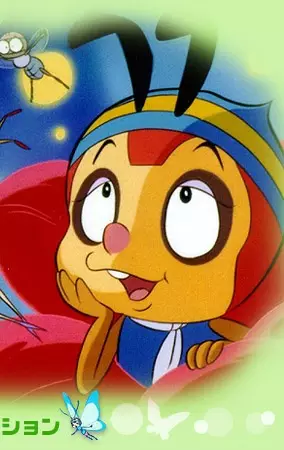
Hutch is a small honeybee who got separated from his mom when his home was destroyed by invading wasps, and he now desperately wants to find her back. It's the beginning of an adventure that will make him meet all kinds of friendly insects who try to help him out, but unfortunately for most of them, they will not survive the end of the episode... (Source: AniDB)

At Shinsei high school, soccer is almost a combat sport and new team coach Teppei Matsuki is a fully paid up sadist who will push his team as hard as necessary to win. Headstrong school bad boy Shingo Tamai and his friend Ohira are determined not to be bullied into joining Matsuki's team; instead they set up a squad of their own, and at first play just for fun and struggle to keep up with Matsuki's team. As their skills progress, they play other teams and get stronger and craftier, until they face the crack Asakase high school squad and its star player Misugi Yan in the schools' final. In a tangle of subplots involving old rivalries and injuries, and a mixed-race player seeking his identity and his lost mother (who turns out to be in jail), Shingo develops his skills as a center forward and looks forward to playing a visiting Brazilian squad. He is seriously injured in a game, but his talent, which even the legendary Brazilian Pele recognizes, is equaled by his determination. With the help of a friend of his old rival Matsuki, he recovers to help the team to victory. Definitely melodrama rather than a sports series proper, this is the first in the line of Japanese soccer soaps that stretches to Captain Tsubasa and beyond. Based on a manga by Ikki Kajiwara and Kosei Sonoda. (Source: The Anime Ecyclopedia)
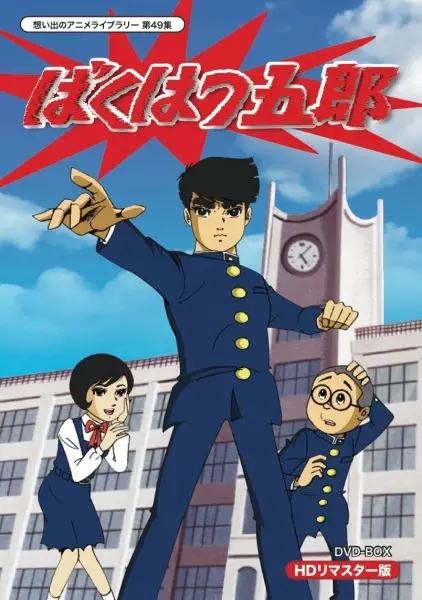
The non-athletic head of the school newspaper department participates in various club activities, including a number of sports clubs, with disastrously hilarious results. (Source: AniDB)
A short kids series featuring cute animal stories. (Source: AniDB)
Humorous adventures of a silly angel, 5 minutes per episode. (Source: AniDB)
Based on the original story by Studio Zero.


The Japanese version of the 1880 Neapolitan song Funiculì funiculà, originally composed by Luigi Denza, with lyrics from Peppino Turco. It was written to commemorate the opening of the first funicular railway on Mount Vesuvius. A Japanese rendition of the song performed by Duke Aces was originally broadcast on NHK's Minna no Uta program in April 1961. It was released under the title Tozandensha (Mountain Railway) and was accompanied by shadow play from the Kakashiza Shadow Play Theatre. It is believed to now be lost media. In June 1970, a performance of the song by the Hibarigaoka Boys and Girls Choir (Hibarigaoka Shounen Shoujo Gasshoudan) was broadcast on the Minna no Uta program, this time under the original song title. The accompanying video was animated by Hal Fukushima.
Music video for the song Akubi no Mukou ni Tobidasou by Nishirokugou Shounen Shoujo Gasshoudan that was featured on NHK's Minna no Uta program.