winter 1972
Loading...
Loading...

This pilot is remembered, really, for one notable reason: this is Miyazaki's first time as a solo director. He teamed up with Takahata for the later episodes of the 1971-72 Lupin III series, but Yuki's Sun marked his first time solely in the captain's seat. Yuki's Sun was based upon a popular shoujo manga (girls' comic) by Tetsuya Chiba which was serialized in 1963. It involves a 10-year-old orphan girl who is adopted into a family. The storyline is somewhat complex, and seems to play out like grand melodrama. Chiba's stories were more sophisticated and grown-up than, say, Osamu Tezuka, who of course was the godfather of postwar Japanese manga. (Source: TheGhibliBlog)
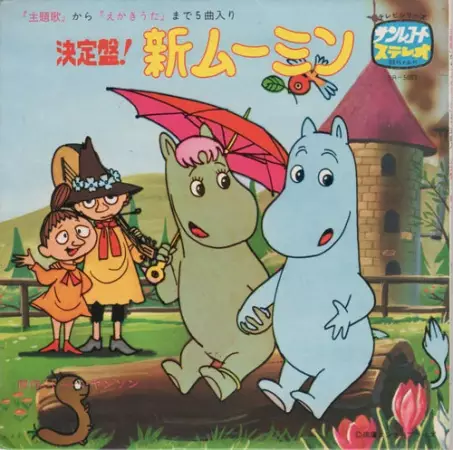
A remake of the 1969-70 Moomin series. This version is more closely based on the books by the Finnish illustrator and writer Tove Jansson.


This version of Pinocchio tells a story of an extremely gullible, naive and morally confused wooden doll brought to life by a mystical blue fairy. Pinocchio (Mokku) is characterized as having many character faults which he must learn to overcome in order to be worthy of being granted humanity. Some of these character faults include selfishness, rudeness, insensitivity, indolence, obstinacy, over- trusting, self-pity, stupidity, disobedience, compulsive lying, arrogance, greed, cowardice, recklessness, cruelty, foolishness and an inability to learn from mistakes. Throughout the entire series Pinocchio (Mokku), partly due to his own delinquency and repetitive disobedience, must undergo other costly ordeals of hardship and pain in which he is continuously tormented, persecuted, bullied, humiliated, tricked, ridiculed, ostracised, beaten, downtrodden and subjected to degrading and inhumane treatment. Its plain depiction of the austere reality of what it would be like to be literally subhuman growing up in a world of danger and hardship, makes this another good example of traditional Japanese stories, which teach moral observance through tough endurance. (Source: Wikipedia)

One morning, two brothers living in a hut with their mother set out for the mountains to set traps for deer. They move silently through the forest undergrowth until suddenly a demon's arm reaches out from the treetops and grabs the younger brother. The older brother aims carefully, calms the shaking of his hands and lets an arrow fly, thus saving his brother's life. The demon's arm is left behind and somehow it looks familiar. After returning home a horrible truth is revealed.... Drawing on an early medieval Japanese legend, the film is reminiscent of the horror psychodrama Kwaidan. The Demon (1972) took awards at many animation festivals. (Source: kviff.com)

Once upon a time, near the ruins of an old castle, there lived the King of Cats. He was famous for his violent temper and now he is lashing out at his three gunmen, who had been ordered to bring back Pero, but had returned empty-handed. Pero, a former subject of the angry King, had lived in Cat Country once but he had dared to save a mouse from death. Now, as everyone knows, the mouse is the mortal enemy of all cats, so the King orders his three gunmen to go to the ends of the earth, if necessary, to find Pero. Pero is a happy-go-lucky sort of feline and very hip for a cat. Fleeing from the wrath of the King, he decides to seek his fortune in the wild and wooly west. On the way, he encounters the King’s gunmen hot on his trail but he foils them and blithely goes on his way. On the stagecoach to Go Go Town, he meets Annie, a pretty girl who is returning after finishing her education in the East, and Jimmy, a boy with sleepy eyes and slow movements. They are attacked suddenly by holdups who are after the new sheriff but since he does not seem to be on the coach, they ride off. Sad news awaits Annie in town. Her father had been killed by the Big Bad Boss for finding out about the bogus money he was making to get rich fast. The Big Bad Boss also kills each new sheriff who arrives to keep law and order in town. He is determined to keep the whole place under his thumb. The Big Bad Boss tries to scare Annie into leaving town but she is her father’s daughter and cannot be frightened away by threats. With the help of Pero and Jimmy, she opens a restaurant in the building her father owned. Once again, Pero happens to save a little Indian mouse caught in a trap. The little mouse’s father, the Chieftain of the Indian mice, promises to help Pero and Annie. The sleepy-eyed Jimmy is really the new sheriff. They all join forces and expose the Big Boss’ villainy and his secret bogus money factory. The Big Bad Boss gets his comeuppance and all ends well. (Source: Toei Animation)
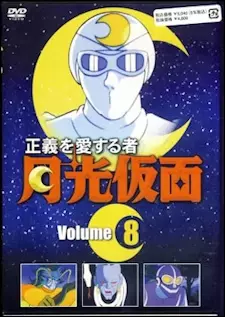
Moonlight Mask's identity has always been a mystery (which is why the Moonlight Mask persona is credited as being played by "?" in the original series). Decked out in white tights, white & red cape, white scarf, yellow gloves & boots, dark glasses, face cloth and Indian-style turban (pinned with a "moon" ornament), Moonlight Mask is armed with a whip, two six-shooters, shuriken and moon-shaped boomerangs. He also rides a motorcycle. However, only audiences know that Moonlight Mask could very well be detective Juurou Iwai who seems to disappear from his friends before the caped crusader rides to the rescue in his motorcycle! Even his comical assistant Gorohachi Fukuro, his friend Inspector Matsuda, and children Shigeru, Kaboko and Fujiko are oblivious to Iwai's secret identity. (Source: Wikipedia)

An erotic animation made for the late-night television program 11PM with a reference to Marcel Duchamp’s work of the same title. (Source: Collaborative Cataloging Japan)
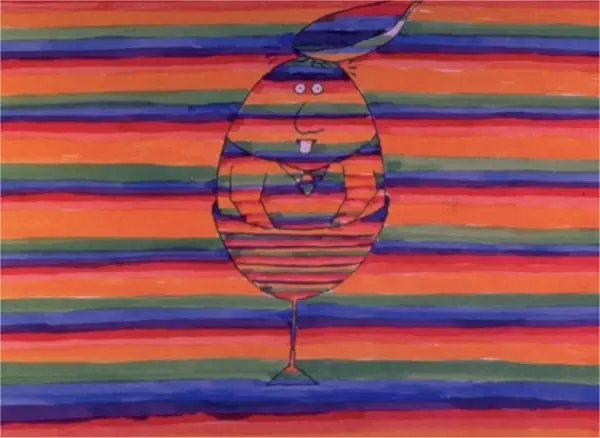


Nihon Mukashibanashi: Saru Kani

Black Cat (Movie)

Mochimochi no Ki

Ikiteirutte Subarashii!

Koinu no Plue

Yamakagashi

Mukashi Mukashi Momotarou

Ousama to Nightingale

Goesu Daejeonjaeng

Tanjoubi no Chachacha


