spring 1973
Loading...
Loading...

The beautiful Jeanne marries a man named Jean, and the happy newlyweds make their way to the Lord's castle with a cow's worth of money for his blessings. However, the demonic Lord is unmoved by their offering, ignoring their desperate, impoverished pleas. The Lord's wife offers an alternative: Jeanne must become the Lord's conquest for the night in a ritual deflowering. Scarred by the experience, the shaken Jeanne receives no sympathy from her husband. Instead, she is neglected. But as Jeanne drifts off to sleep, she is met by a strange spirit that encourages her to deliver retribution to those who wronged her. And with a mysterious surge of pleasure and an unquenching libido, Jeanne agrees. Kanashimi no Belladonna is a captivating, psychosexual adventure that tells a story of cunning witchcraft and deceitful superstition in a poor, rural village of medieval France. [Written by MAL Rewrite]

Nobita Nobi is so hapless that his 22nd century decendants are still impoverished as a result of his 20th century bumbling. In a bid to raise their social status, their servant, a robotic cat named Doraemon, decides to travel back in time and guide Nobita on the proper path to fortune. Unfortunately Doraemon, a dysfunctional robot that the familly acquired by accident (but chose to keep nonetheless), isn't much better off than Nobita. The robot leads Nobita on many adventures, and while Nobita's life certainly is more exciting with the robot cat from the future, it is questionable if it is in fact better in the way that Doraemon planned. (Source: AniDB)

The adventures of Isamu, a young boy living in the Far West, searching for his real father.
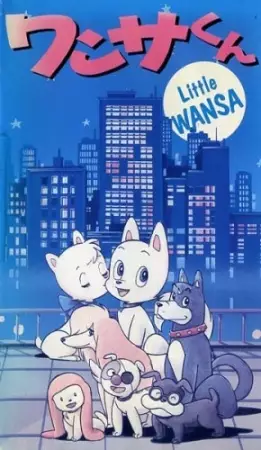
The hero of Wansa-kun is Wansa, a puppy who is sold for a pittance, then escapes, and spends much of the rest of the series looking for his mother.

This work focuses on environmental issues from the viewpoint of insects. In a refreshing twist, the central character miniaturizes, unlike the conventional hero who grows ever larger. From this perspective, the world looks different and unfamiliar. This work enables the reader to see that the world around is quickly moving towards destruction. (Source: en.tezuka.co.jp)
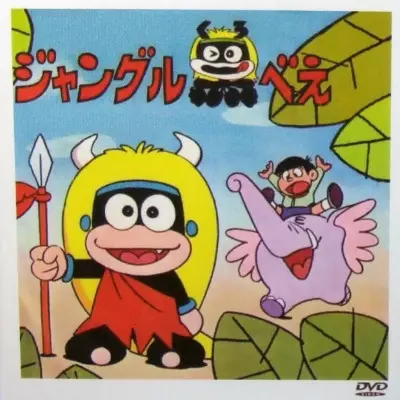
Urobe was a son of the great chief of Pyrimi, Africa. One day he hung on an airplane and came to Japan. Because of the cold and hunger, he fell on to the yard of Shishio’s house, and Shishio nursed him. Kurobe was very thankful for him and began to repay for his kindness. Kurobe dug a big hole in the yard.Every time he returns the favor, he threw a stone into the hole until stones would fill the hole. (Source: ANN)
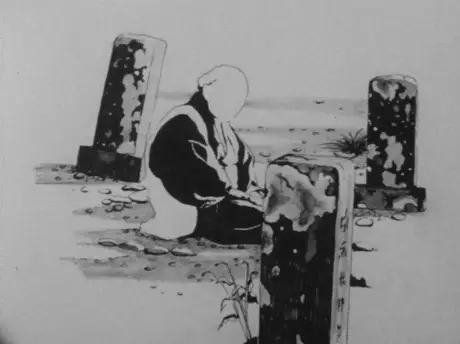
Photographs of the artist’s grandmother are superimposed with animation that traces her life, and the work ends with the memorial photograph displayed at her funeral. A sense of tranquility pervades this documentary animation work. (Source: Collaborative Cataloging Japan)
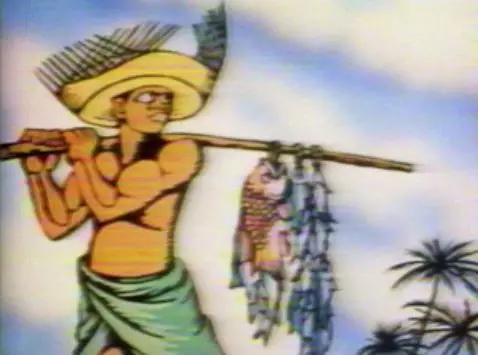

Music video explaining solutions to various mathematical problems that aired as part of NHK’s Minna no Uta program.
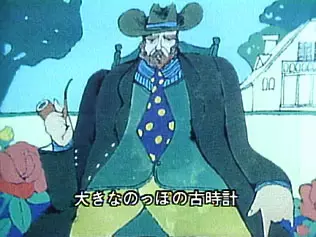
The second release of the Japanese version of the 1876 song My Grandfather's Clock by American composer and songwriter Henry Clay Work that was broadcast on NHK's Minna no Uta program. It was again performed by Sumito Tachikawa and the Nagato Miho Kagekidan Jidou Gasshoudan (Miho Nagato Opera Children's Choir), but this time featured animation by Yoshiyuki Takeguchi.